User
People keep the process running with personal lists, emails and things they remember.
Education • healthcare training • knowledge organisations
DUID. provides process and information advice when workflows become difficult to follow, information is scattered and systems do not fit the work. I map the connections and bottlenecks and turn them into practical choices for improvement, drawing on my experience in education and knowledge organisations.
9+ years of professional experienceeducation practice · psychology · ICTExplore my experienceuser • process • information • system
First understand.
Then improve.
01
Your challenge · Sound familiar?
Processes rarely get stuck because of one major mistake. Small workarounds, exceptions and handovers tend to accumulate.
Everyone does their best to solve their own part, yet the overall picture gets lost. DUID. investigates where the friction actually arises before proposing another tool, procedure or reorganisation.
People keep the process running with personal lists, emails and things they remember.
An exception became a standard route without anyone deliberately designing it.
Data exists, but it is incomplete, inconsistent or unavailable where it is needed.
There are too many systems, or a system is used so rarely that people have to learn it again each time.
02
Expertise · Grounded in practice
My starting point is postgraduate and regulated training, where content, quality, records, data, people and digital systems constantly need to work together.
That practical experience is the foundation of DUID. The approach also applies to professional associations, registration bodies and other knowledge-intensive public and social organisations. Where relevant, it can clarify learning and development questions and help compare options systematically.
Turning complex educational processes into clear process models, routes and user-centred diagrams.
Analysing, structuring and, where needed, cleaning data; translating complex records, criteria and exceptions into consistent procedures.
Organising educational logistics, assessment, quality frameworks, information and responsibilities as a whole.
Supporting implementation and development towards a familiar setup that people use regularly and remember.
Process models • process visualisations • data analysis • data cleaning • application routes • user-centred diagrams
03
Services
A brief look with substance.
WHEN?You want to identify the bottleneck and a useful next step before mapping an entire process.
A concise overview of bottlenecks, possible causes and promising first steps.
For processes that once made sense.
WHEN?You want a defined process analysed and visualised thoroughly, including exceptions, duplication and handovers.
A shared view of the process, insight into bottlenecks and an evidence-informed improvement agenda.
Improvement beyond the paperwork.
WHEN?The bottlenecks are clear. Now the working practices, information and digital support need to fit together better in practice.
An improved way of working that fits people and responsibilities, with as few unnecessary systems and handovers as possible.
We agree on scope, deliverables, timing and price in advance. Where possible, I work with a fixed project price. The scope is always defined before work starts.
04
Approach
I listen, ask questions and investigate how people process information and actually do the work, including exceptions and informal solutions.
I connect observations about users, processes, information and systems into a clear picture of causes and dependencies.
We choose suitable improvements, develop them and test them in practice, so a new design goes beyond the page.
Independent, careful and grounded in practice.
A hefty report that gets professionally filed away in a drawer.
05
About Danny Bouwman
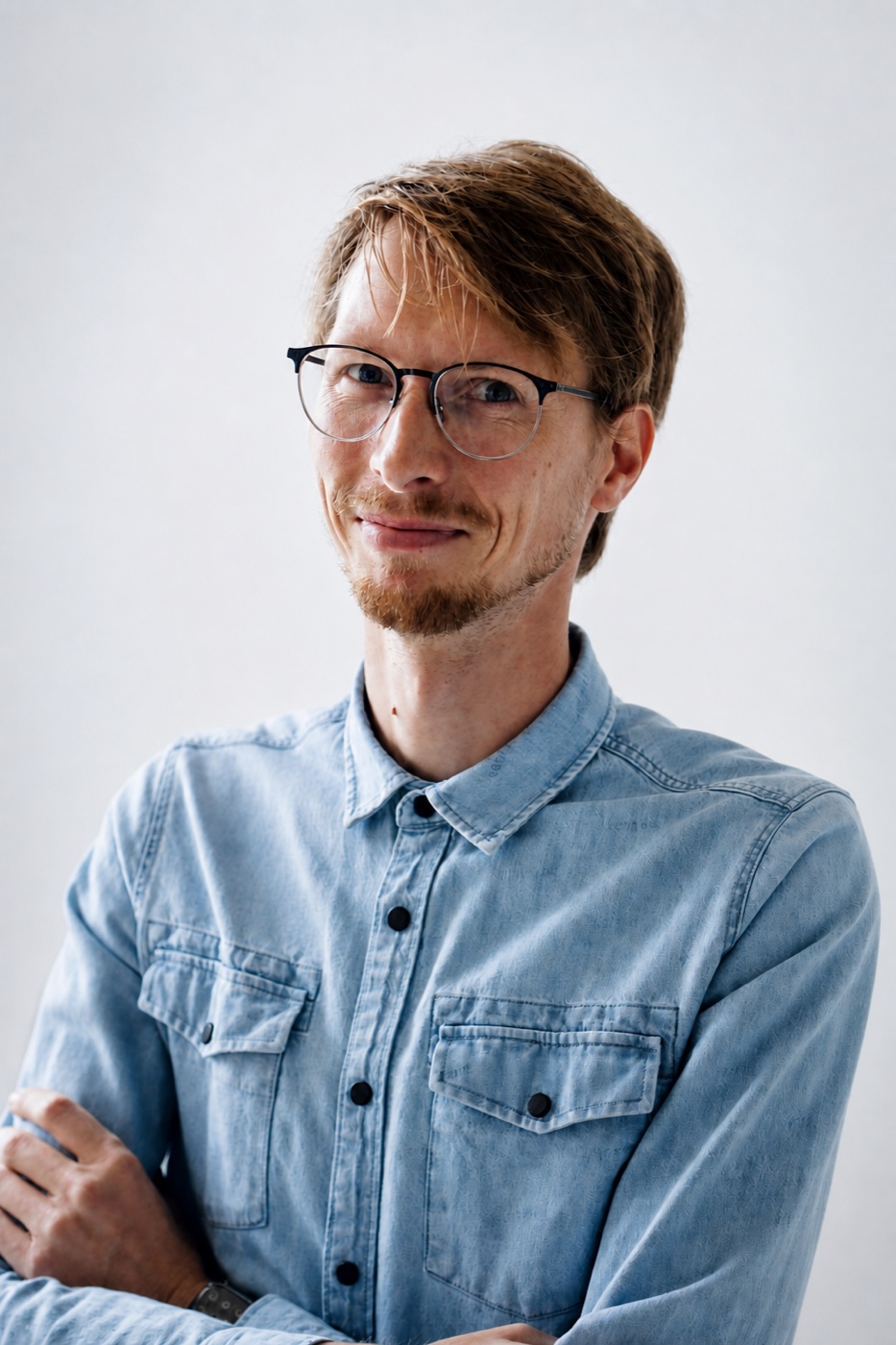
My strength lies in the combination of psychology, technology and years of experience in education practice.
My BSc in Psychology helps me understand users, behaviour, collaboration, information processing and responses to change. I look beyond the formal design of a process to understand why it does or does not work in practice.
My ICT background and experience with digital education environments help me understand systems, data and their configuration. I analyse, structure and clean data where needed to reveal patterns, exceptions and information needs. I consider both technical capability and whether a system is used regularly and consistently enough for people to retain their knowledge. I prefer one well-embedded system to several solutions that need explaining each time.
My experience in complex postgraduate training connects these perspectives with policy, quality frameworks, assessment of records and everyday practice.
06
Experience in practice
Four examples from my work at Radboud University and RadboudCSW. These are employment experiences I build on, not DUID. projects or client cases.
Each example describes the challenge, my own contribution and the expertise I bring. Naming an organisation does not mean it is a DUID. client or endorses my practice.
Radboud University · RadboudCSW · in coordination with vLOGO
Organising a national application process, information provision and coordination as a whole.
Radboud University · RadboudCSW · national screening for vLOGO
Connecting complex assessment of records with a simpler, explainable procedure.
Radboud University · RadboudCSW
Turning national policy into a workable procedure and careful handling of individual cases.
Radboud University · RadboudCSW
Connecting education, quality and digital support through familiar and sustainable use.
A process that keeps causing friction?
We could schedule another meeting. Or first explore what is actually happening, what has been tried and whether a fresh outside perspective could help.
Email a brief description of what is happening and where you need help. We can talk by phone, online (for example through Teams) or at your location. I do not receive visitors at my registered address.
If your question fits DUID., we agree on scope, timing and price before starting. Any travel and parking costs are specified in the proposal in advance, with no surprises afterwards.